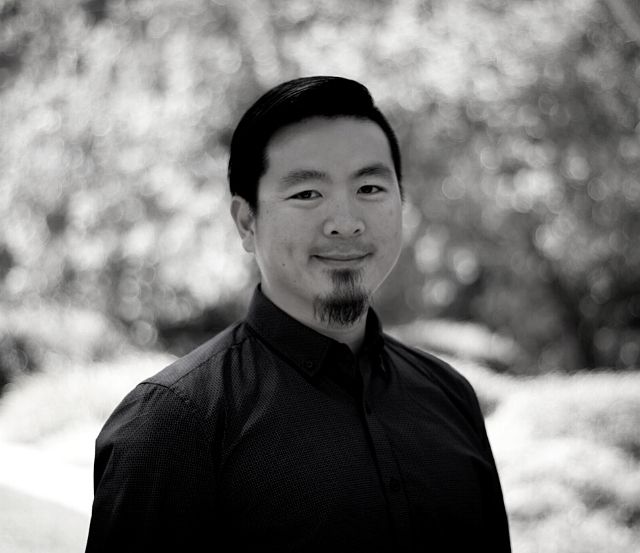
Tom Chan
Biography
Tom wrangles messy problems at the interface of law, economics and technology. In consulting and government, he provided expert advice on antitrust, policy, regulatory, digital services and long-term strategy for managing systemic transitions accelerated by technological and global developments, e.g. zero-emission/autonomous vehicles, waste/recycling infrastructure. Former Vice President of the Economic Society of Australia (Vic chapter) and recognised as the Society's 2020 Honorary Fellow for establishing in Australia a public-facing polling platform to gauge and transmit expert opinions/consensus of 50+ eminent economists on policy issues and current affairs. Tom was among the first 16 selected Master students/co-designers and 5 PhDs of ANU’s innovation institute, 3Ai, as it evolved into the School of Cybernetics (SOCY). Going beyond 3Ai’s initial focus on safely, sustainably, and responsibly scaling artificial intelligence and cyber-physical systems in the 4th Industrial Revolution, Tom continues to evolve with SOCY to develop transdisciplinary approaches to better manage complex societal transformations. Researching viable purpose-driven organisations that mobilise rating/certification schemes to imagine aspirational futures and drive systemic change towards 'greener', ‘healthier’, 'smarter' built environments. Developing new theory and praxis for how similar ‘socio-technical transition intermediaries’ can effectively, efficiently, and equitably ‘sense, shape, steer and scale’ (4S) change cybersystemically whilst remaining viable.
Sessions
‘Se hace camino al andar’: barefoot cybernetic pathmaking to Stafford Beer
What did Stafford say, again? 'No hay camino, se hace camino al andar' (translation: 'There is no road; you make your own path as you walk'). I trace my 'barefoot cybernetic' co-evolutionary journey with the ANU School of Cybernetics (SOCY): from walker in its first experimental transdisciplinary Master program - now Master of Applied Cybernetics) through its predecessor 3Ai - Autonomy Agency & Assurance Institute) to walker again in its first experimental transdisciplinary PhD program. Our purpose is to develop new theory, praxis and policy for managing new systems and major societal transformations safely, sustainably and responsibly. As self-appointed CBO (Chief Beer Officer), I will be offering tasting samples of freshly brewed Beer-inspired outputs and research from mid-career professionals / PhD students who, like me, (re)discovered and adapted the Viable System Model (VSM) for critical challenges today of managing complex cyber-physical systems and sociotechnical transitions: from smart street lighting, to venture capital decision-making structures, to ratings/certification bodies transforming markets and built environments for people, planet and profit. With other internal and external programs of work at SOCY, we are walking and making our own paths, humming and introducing Stafford and the VSM to new generations of cybersystemic thinkers, makers and doers at the ANU and beyond!