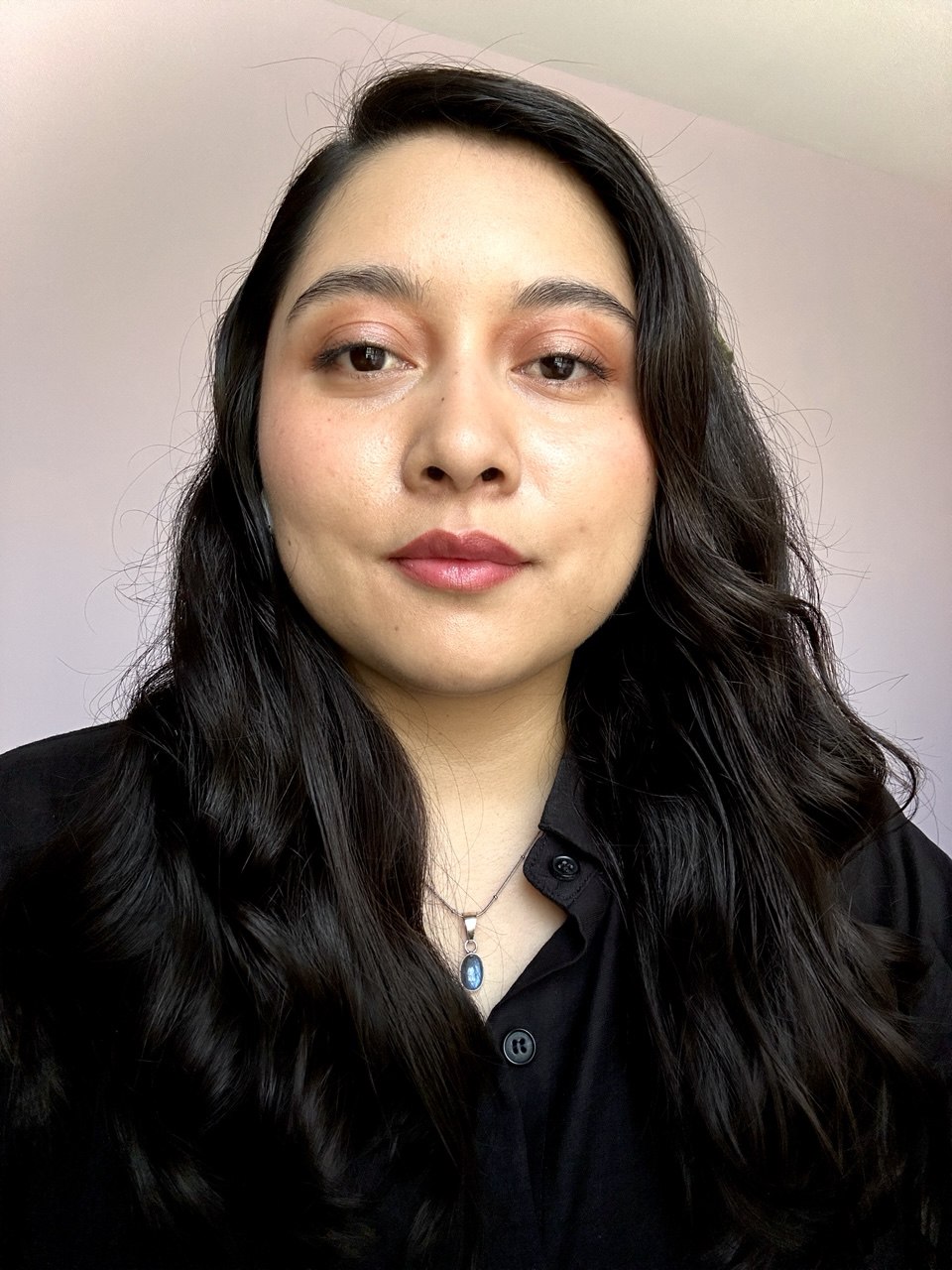
Zeltzin Perez Matamoros
Instituto Politécnico Nacional, Mexico
Biography
PhD Candidate in Systems Engineering at Instituto Politécnico Nacional, Mexico. Her research focuses on Systems Thinking, complex systems, water governance and the dynamics of tourism systems from a transdisciplinary perspective. Her work centres on the study and design of social-ecological systems through the application of methodologies such as the Viable System Model, Soft Systems Methodology and System Dynamics to address challenges related to sustainability and governance. She has published scientific articles in JCR indexed and international journals, as well as book chapters on tourism, sustainability and Systems Thinking. She has presented her research at international conferences, including Metaphorum (Berlin and Manchester) and ISSS (Washington and Birmingham), as well as at several national events, including the International Congress on Applied Tourism Research and the Mexican Academy of Tourism Research. She is a member of Grupo de Investigación en Sistémica y Turismo. Her research integrates Systems Thinking with territorial action to contribute to the design of governance strategies and regenerative solutions for rural communities.
Sessions
Governance in the Magdalena River Community from the Postulates of the Viable System Model
The current problems facing humanity are closely linked to entropy in social-ecological systems, particularly because these systems are embedded within highly complex environments. This is especially evident in territories of high environmental value, where communities manage these areas empirically or through ancestral knowledge. Presently, in Mexico City, there remains a last river (Magdalena) located within a conservation zone that partially supplies potable water to the surrounding communities. This research aims to diagnose the social-ecological system existing in the Magdalena River area through the Viable System Model (VSM). The results show that applying the VSM to unstructured (rigid) rural communities enables an understanding of the system’s “living” state and its main weaknesses, which are driven by urban sprawl pollution and overtourism, primarily impacting System 5. This indicates that System 5 is overloaded by external disturbances that Systems 1-4 fail to absorb. This implies that the rural community’s identity has become exposed, lacking the necessary recursivity to address its viability in the face of such disturbances. Should System 5 collapse or lose its identity, the entire system ceases to exist as a viable unit. It is proposed to equip the system with recursive mechanisms that allow it to filter urban pressure and redefine its identity from autonomy rather than reaction. Through this, the Magdalena River can cease to be an “object,” gaining the capacity to generate an identity that provides homeostatic balance to the entire system and its environment.