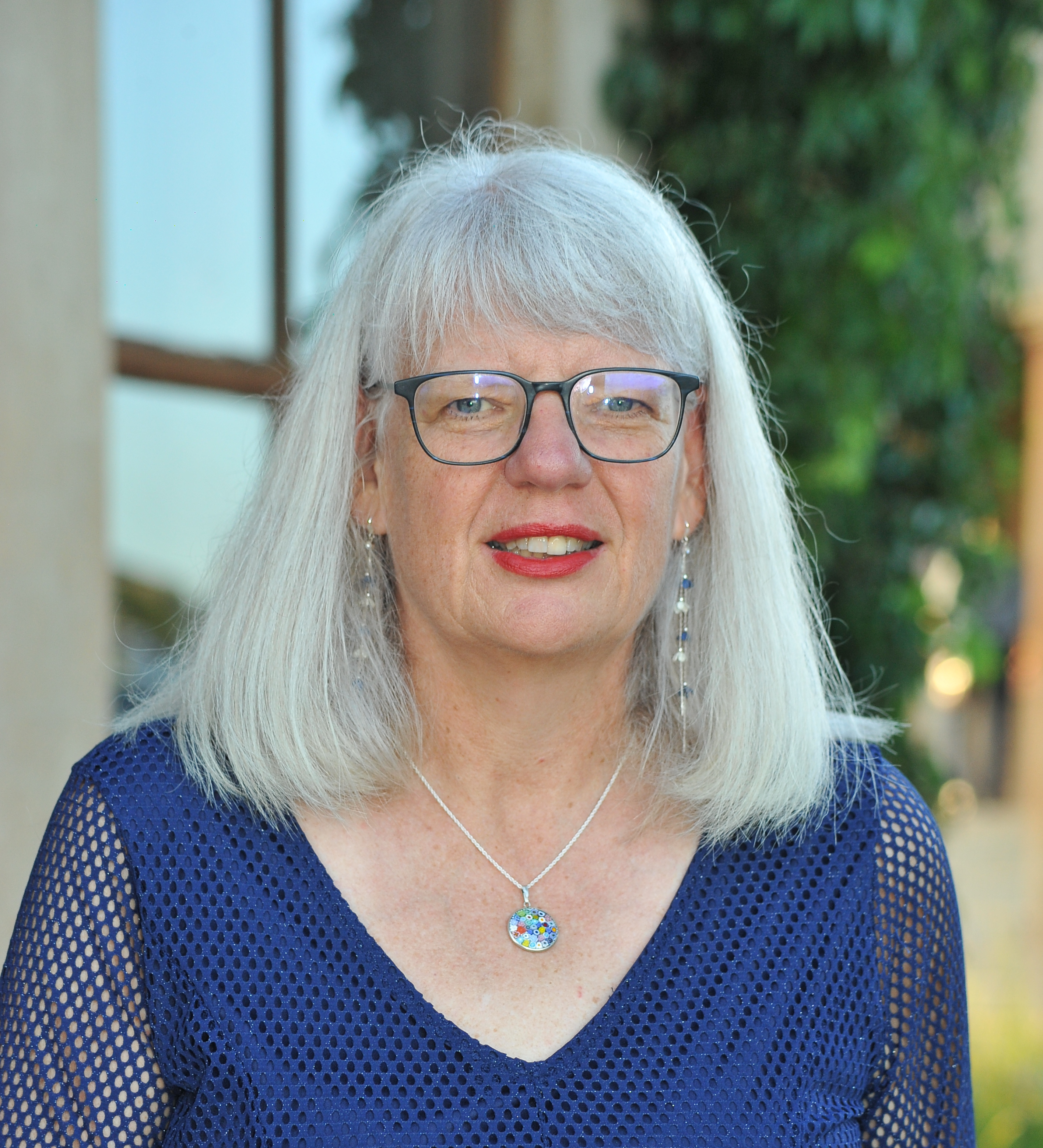
Roelien Goede
North-West University, South Africa
Biography
Roelien Goede is the Director of the Unit of Data Science and Computing at North-West University, South Africa, and a Past-President of the International Society of Systems Sciences. Her research interest is Critical Systems Thinking applied to Business Intelligence. She is an independent assessor for the L7 ST apprenticeship in the UK. She has been involved as a systems specialist in various international projects and frequently presents workshops and keynote addresses on Critical Systems Heuristics. She has published in journals such as Systemic Practice and Action Research, Systems Research and Behavioural Science (SRBS), Journal of Transdisciplinary Studies, and Communications of the Association for Computing Machinery (ACM) and the Institute of Electrical and Electronics Engineers (IEEE) on Computer and Information Science. She is the section editor for Critical Systems Thinking of the SRBS. She holds a PhD in Information Technology from the University of Pretoria, South Africa. Her PhD focus was on Systems Thinking in Decision Support Systems. She has supervised 14 PhD students and 16 Master’s students. She is recognised by the South African Research Foundation as a scholar with considerable international recognition for the high quality and impact of her work.
Sessions
Foundations in Dialogue: Comparing VSM and CSH through Checkland’s FMA Framework
Purpose: Metaphorum 2026 marks Stafford Beer’s centenary and, following Peter Checkland’s passing, offers an opportunity to revisit the foundations of systems practice. This paper compares Beer’s Viable System Model (VSM) with the critical systems tradition developed from C. West Churchman through Werner Ulrich’s Critical Systems Heuristics (CSH), including its critical-realist extension, CSH 2.0. Methods: Using Checkland and Holwell’s FMA framework, we distinguish the frameworks of ideas (F) underpinning each approach, the methodological resources through which they are enacted (M), and their use in a shared organisational area of concern (A). The inquiry is conducted as an asymmetric dialogue between a CSH specialist and a methodologically pluralist practitioner experienced in Soft Systems Methodology, system dynamics and VSM. Kuhn informs our treatment of theory-laden terminology and the risks of translation across paradigmatic traditions. We compare ontological, epistemological and axiological assumptions; criteria of adequate inquiry; and differing treatments of purpose, boundary, control, variety, complexity and the affected. Findings: We argue that VSM and CSH are neither substitutes nor directly commensurable methodologies. VSM primarily examines the organisational and regulatory conditions for viability, whereas CSH critically examines the boundary judgements, knowledge claims, interests and legitimacy of proposed improvements. Through an illustrative application and reciprocal critique, we identify where the approaches converge, complement one another, remain non-equivalent or stand in tension. Implications/Contributions: The contribution is practical guidance for selecting and relating the approaches, together with an iterative boundary–viability inquiry intended to generate reframings and interventions not produced by either initial analysis alone.